|

|
|
|
Included in this edition:
|
|
|
Celebrating the 40 Year Anniversary
|
|
Forty Years of Peace for Health: The Enduring Legacy of the Peace Caucus Elise Pohl, MSc and Patrice Sutton, MPH, Co-Program Planners, Peace Caucus
|
|
|
|
Outside the United Nations stands Let Us Beat Swords into Plowshares, a bronze sculpture by Evgeny Vuchetich. Gifted to the UN on December 4, 1959 by the USSR and presented by Vassily Kuznetsov to UN Secretary-General Dag Hammarskjöld, the figure embodies a universal hope: “that humanity might transform the tools of war into tools for life.”
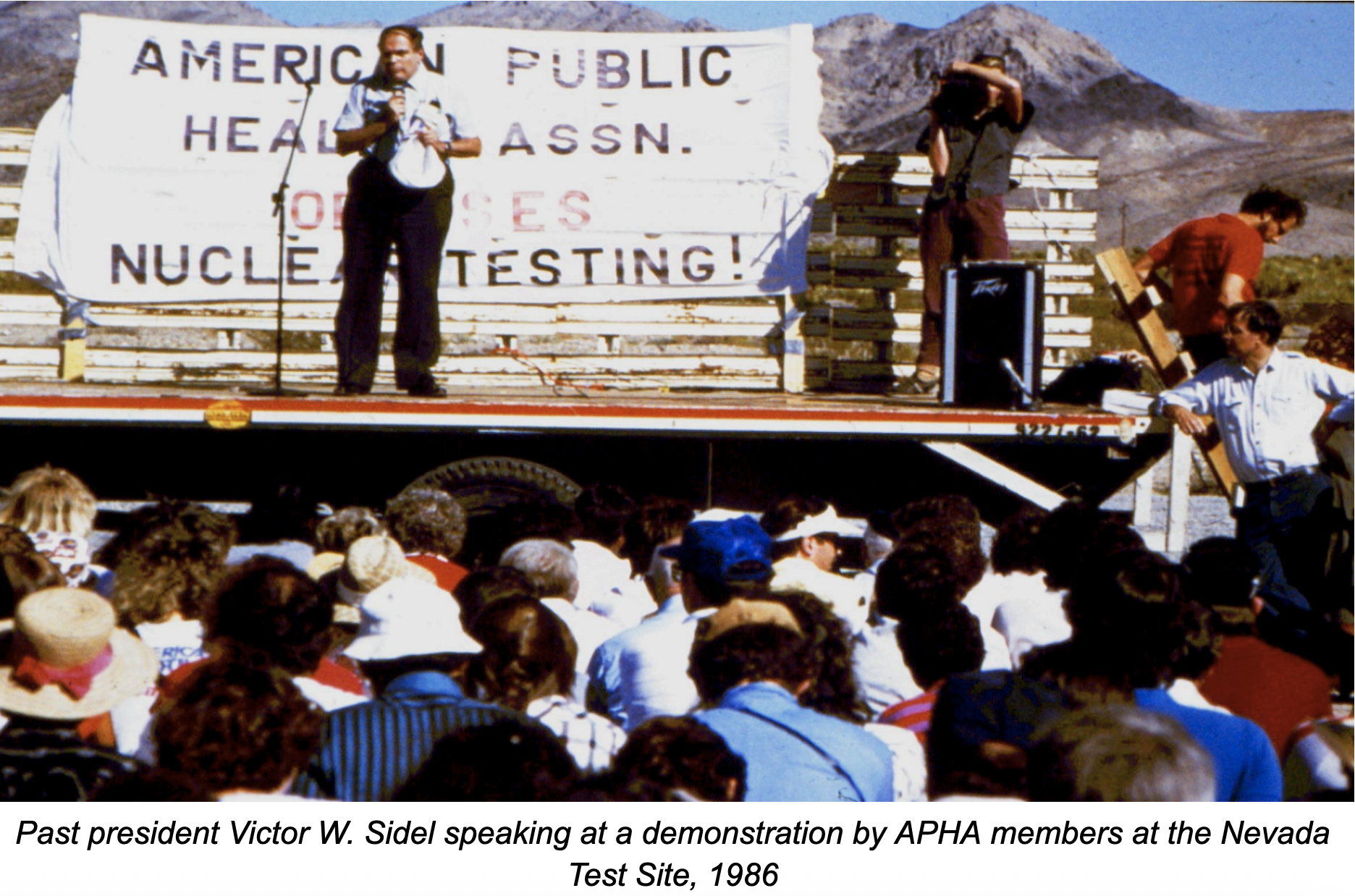
For the Peace Caucus in affiliation with APHA, that hope has been a working mandate for forty years: peace is a public health priority, and the absence of peace is a public health crisis. At APHA’s 113th Annual Meeting in 1985, APHA President Victor W. Sidel, MD, used the closing general session to emphasize that preventing nuclear war is essential for public health. H. Jack Geiger, MD added another challenge still relevant today: (paraphrased) “if we paused military spending even briefly, we could fund the proposals brought to APHA and still have resources to save lives globally.” Their framing of war and militarism as preventable causes of morbidity and mortality, and peace as a public health imperative, sparked the Peace Caucus.
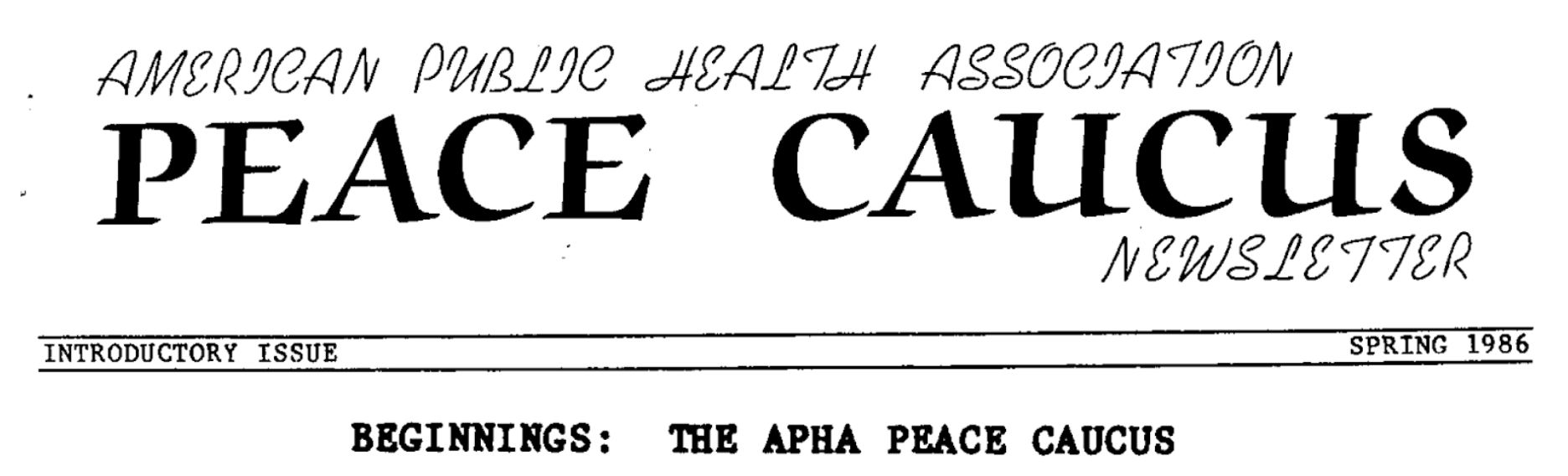
Early membership grew rapidly (116 founding members in all), including Gail Gordon, Lawrence Egbert, Larry Kushi, Patrick Johnson, Rosalind “Bobbie” Singer, Kathy Fagan, and many others including current Co-Chair Robert (Bob) Gould, MD, and Co-Program Planner Patrice Sutton, MPH. The first Peace Caucus newsletter appeared in Spring 1986. From the outset, the Caucus linked education, academia, advocacy, and solidarity to human rights and global justice. Through this work, several commitments continue to guide us:
Forty Years of Program Impact The Peace Caucus organizes scientific sessions at APHA’s Annual Meeting, develops and supports policy, and shares evidence on the health impacts of war, armed conflict and multiple other forms of violence. Through this work, we underscore that peace and social justice are foundational determinants of health, and that creating peaceful and just environments allows communities to thrive. Across four decades, the Peace Caucus has organized nearly 200 scientific sessions and featured close to 1,000 presentations at APHA– evidence of sustained leadership at the intersection of peace, justice, and public health.
Early Milestones (late 1980s–mid-1990s)
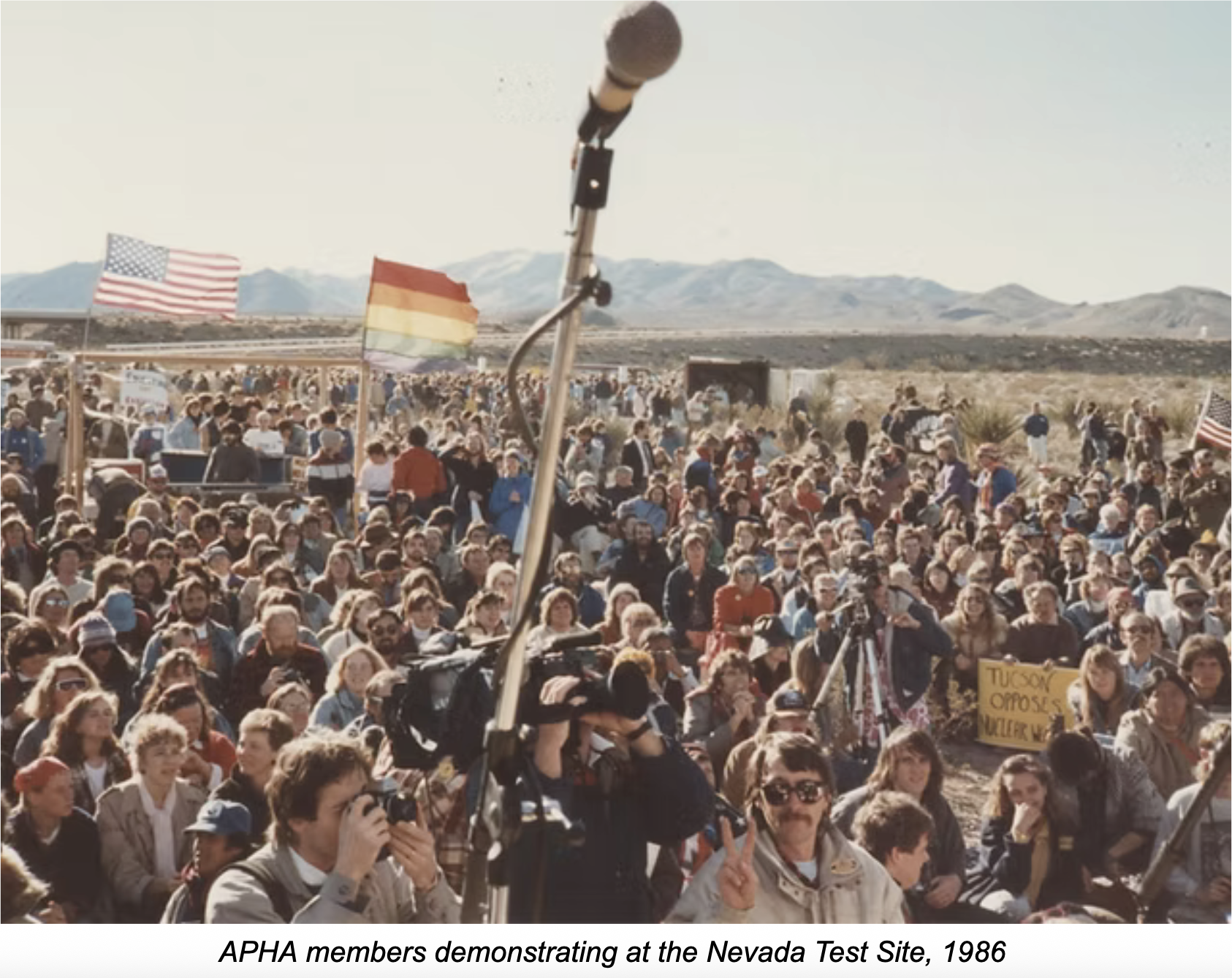
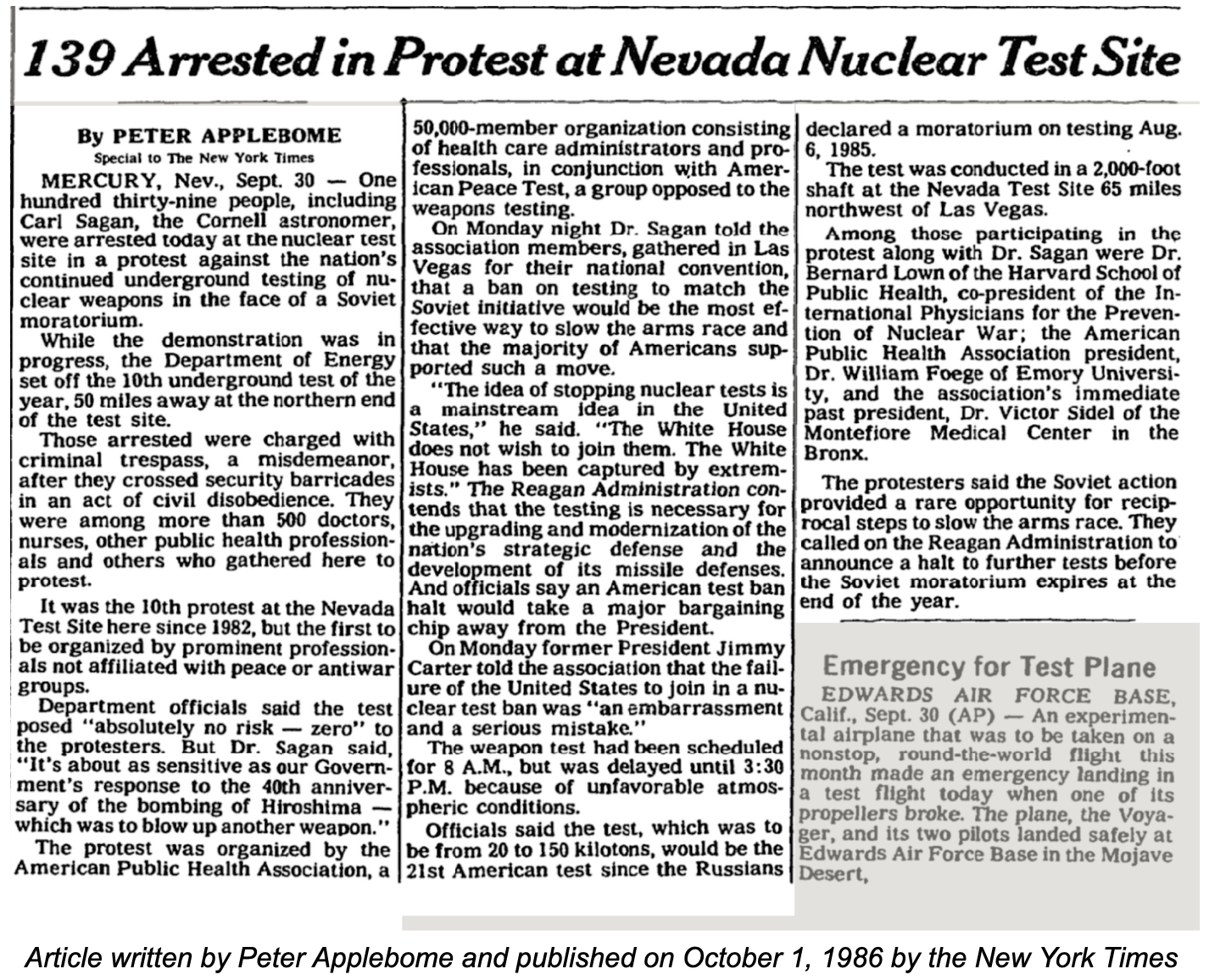
These years set the tone as scientific sessions plus activism. At APHA’s annual meeting in 1986, more than 500 APHA members, including APHA’s leadership, rallied at the Nevada Test Site in support of a Comprehensive Nuclear Test Ban Treaty, with 130 members participating in non-violent civil disobedience. The Peace Caucus continued to scrutinize the health costs of the nuclear weapons enterprise throughout the subsequent decades. Between 1989 and 1995, many sessions documented health harms of nuclear weapons research, development, testing, and production – from worker and community exposures to radioactive fallout, spanning radioactive risks in Russia, proposed waste sites in Ward Valley CA, and U.S. Department of Energy disclosures about secret radiation experiments. The Caucus documented these myriad health consequences in detail and demanded accountability and justice for populations that had been harmed. By 1989 Caucus members were collaborating internationally, including cycling for peace across Russia. In 1991 attention expanded to the Persian Gulf War, “low-intensity conflicts” in Central America, and the adverse public health legacy of landmines. In 1997 Peace Caucus founder Victor W. Sidel and Barry Levy published the first edition of the seminal book, War and Public Health.
Post 9/11 to Iraq War (2000s)
After September 11, 2001, the Peace Caucus urged justice and security, not revenge, warning against militarized responses evinced by the “Wars on Terror” that worsen population health. The Peace Caucus began sponsoring programs covering the dangers of various “bioterrorism” initiatives that same year. The acute and enduring health harms of militarism, conflict, and war on veterans and communities in the U.S. and across the globe became a recurrent theme. In 2003, Levy and Sidel published Terrorism and Public Health, reframing terrorism as a health issue and arguing for prioritizing prevention, diplomacy, and attention to the root causes of war and conflict.
During the Iraq War, the Caucus kept public attention on its adverse health impacts. In 2004, with the Labor Caucus, the Peace Caucus hosted Unembedded, a photojournalism exhibit on the human cost of the Iraq war. The Peace Caucus’ program also brought to the fore the water, environment, and child health impacts of the occupation of Palestine, and structural violence as a determinant of health, deepening its dual role as activist conscience and scientific forum within APHA. In 2005 Sidel and Levy published the first edition of Social Injustice and Public Health, reaffirming that health equity depends on peace.
Publications & Voices (2010s)
The 2010s expanded on these themes, linking militarism with broader social determinants, for example spotlighting opposition to military recruiting in schools. In 2015, Noam Chomsky addressed APHA, connecting global militarism to contemporary public health crises. During this period climate change, conflict, and population displacement became central topics of attention. In 2017 the legacy of Peace Caucus founder Victor W. Sidel was honored through reflections by Daniel Ellsberg. The Caucus also continued to document the adverse health consequences of wars in Syria and Yemen.
Scholarship & Education: Primary Prevention of War
Peace Caucus members have written many policy statements adopted by APHA demonstrating the inextricable link between public health, conflict, and war. For example, in 2009 Caucus members were collaborators on the landmark APHA policy, The Role of Public Health Practitioners, Academics, and Advocates in Relation to Armed Conflict and War, which provides the scientific basis and justification to support that war has profound public health consequences, and it is an entirely preventable source of some the world’s worst public health catastrophes. Therefore, public health practitioners, academics, and advocates have an essential role to play in preventing war.
In 2020 APHA reaffirmed its support for the abolition of nuclear weapons with the Policy Statement: Toward a World Free of Nuclear Weapons, updating the evidence and urging the U.S. to join the Treaty on the Prohibition of Nuclear Weapons.
In October 2023, the Peace Caucus initiated a Health Care and Public Health Professionals’ Call to Immediate Action to Address the Violence in Israel and Gaza and Its Health Consequences signed by hundreds of public health professionals. In 2023 APHA also overwhelmingly passed the Late Breaker supported by the Peace Caucus calling for an immediate cease-fire in the Hamas–Israel war, humanitarian aid access, and de-escalation, an expression of the same principles the Peace Caucus has advanced since its inception .
Beyond organizing scientific sessions illuminating the fundamental relationship between peace and public health and advancing policy to make these relationships actionable, the Peace Caucus maintains a visible presence at APHA’s Expo, sharing evidence on the health harms of our continued investment in nuclear weapons and militarism. These efforts engage students, healthcare providers, academics, and policymakers, locating peace at the center of public health, rather than at its fringes.
Continuing the Legacy
|
|
|
|
|
|
|
|
|
|
|
Peace Caucus Program Information |
|
Naseem Parsa, MPH, MBA; Program Co-Chair Peace Caucus |
|

|
The Peace Caucus is proud to present a diverse and exciting schedule of events at the 2025 APHA Conference! You can find the program at a glance here.
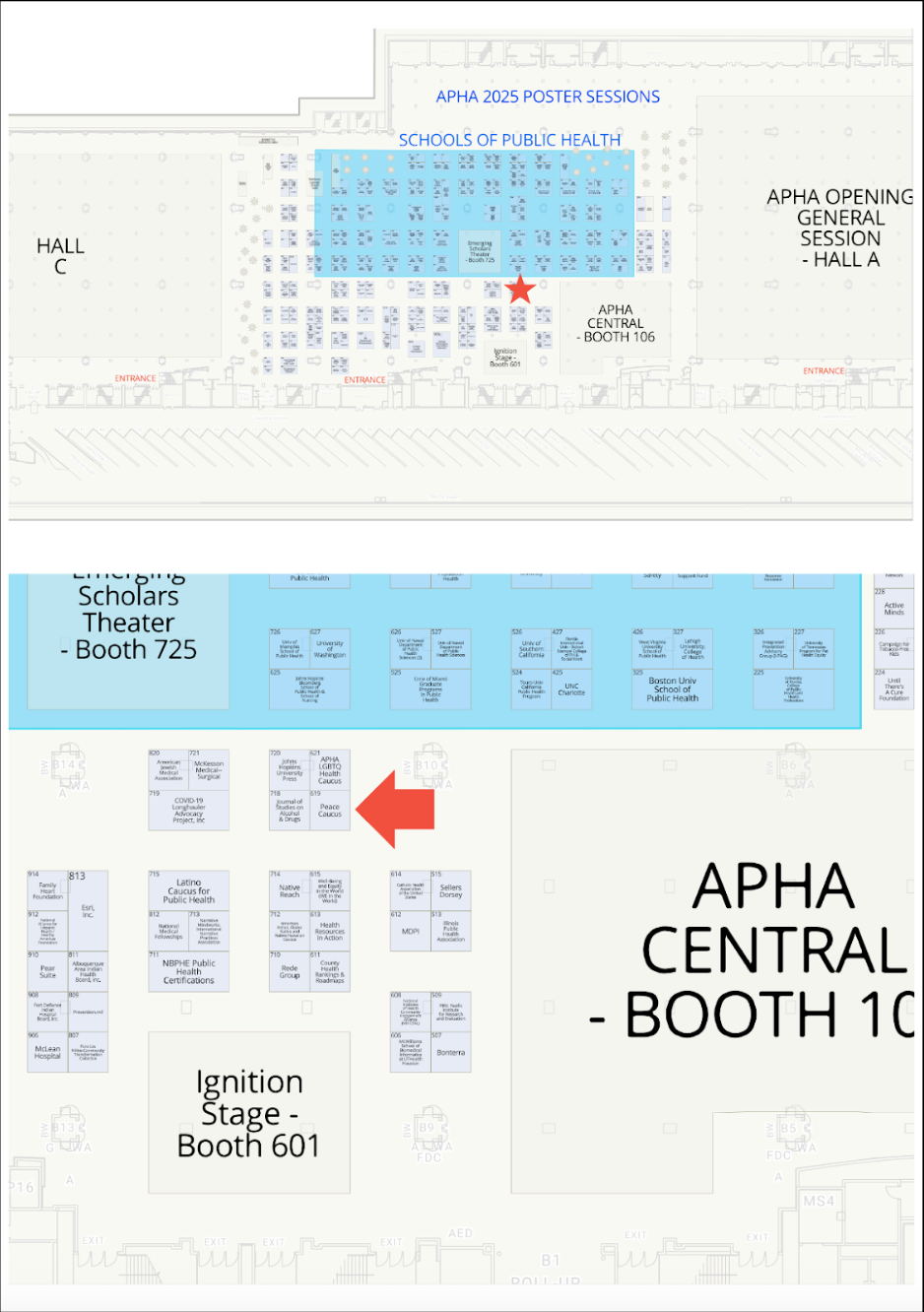
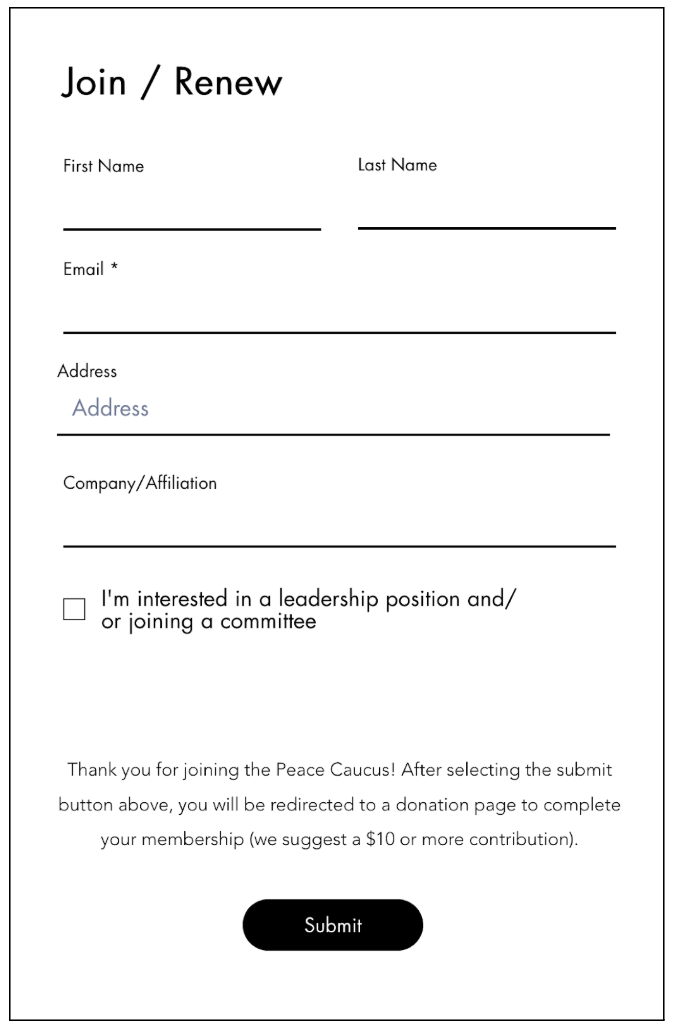
Please join us at the Peace Caucus Business Meeting on Sunday, November 2 from 9:00 am-10:00 am ET in the Washington Convention Center Room 158A. We will be voting on our new bylaws at the meeting. If you’d like to become a member of the Peace Caucus and vote on the bylaws, please fill out this short form and complete the $10 dues payment. We will have a table in the Exhibit Hall, so please come visit us at Booth 619! |
|
|
Exhibition Hall Floor Plan On Sunday, November 2 from 4:30 pm-6:00 pm ET in the Washington Convention Center Room 147B, the Peace Caucus will be hosting its first session called “’Forgotten’ Conflicts. This session will focus on some of the current and past conflicts around the world that have not been given due attention, including Sudan, Tigray, and Laos. Speakers will discuss the public health consequences of these forgotten conflicts, and the limited resources they have to address those consequences.
If you’d like to attend the Health Activists Dinner, please register here. The dinner will take place on Sunday, November 2 from 6:00 pm-9:00 pm ET at Busboys and Poets at 2021 14th St NW, Washington, DC 20009. Tickets are $100 or $75 for students and unemployed/reduced income folks. To find out more about the history of the Health Activist Dinner, please click here.
On Monday, November 3 from 8:30 am-10:00 am ET in the Marriott Marquis- Mount Vernon Square the Peace Caucus will be hosting a session on health professional advocacy and current efforts to “modernize” the US nuclear weapons program called "Health Professional Advocacy in the Age of Trump: Lessons learned from the Movement to Abolish Nuclear Weapons.” Speakers include members of Physicians for Social Responsibility, Ann Suellentrop, MS RN, presenting an abstract called “Kansas City, Missouri, is at the center of the new 21st century nuclear arms race; Joseph Hodgkin, MD, presenting “Strategies for effecting disarmament: What lessons from the 1980s can we use in 2025?;” Gwen DuBois presenting “The existential threat of nuclear war: How to wake up the public and prevent what we cannot cure.” To read more about Gwen’s efforts to prevent nuclear war, click here.
Later in the day on Monday, November 3 from 10:30 am-12:00 pm ET in the Marriott Marquis- Marquis Salon 3, we’ll be hosting a session called “Gaza: A look at the current public health threats.” Speakers will discuss the destruction of the health care and public health system, current health needs, and efforts to end arms sales of weapons produced in Maryland.
On Tuesday, November 4 from 10:30 am-12:00 am ET in the Marriott Marquis- Mount Vernon Square, join us for a special session celebrating 40 years of the Peace Caucus called “40th Anniversary of the Peace Caucus: The role of public health professionals in preventing war and building peace.” We’ll hear from APHA past-president Barry Levy, MD, MPH, on efforts to promote peace, and long-time Peace Caucus member Leonard Rubenstein on protecting health care workers in war. We will also have speakers presenting on the role of health diplomacy in peace efforts, and the effects of moral distress on minority population clinicians working in Israel.
Later in the day on Tuesday, November 4 from 4:30 pm-6:00 pm ET at the Marriott Marquis- Mount Vernon Square, we’ll have a session dedicated to veterans issues, “Veterans Issues: The public health costs of war and militarism.” The military’s impact on the climate crisis is an underappreciated one, yet the effects of this influence are widespread and pose an existential threat. This panel will trace the history of military emissions and the concerted effort to mask accurate and transparent reporting of emissions quantities and consequences and discuss the impacts of Pentagon’s spending on the federal budget and meeting health and other human needs.
Join us at the International Health Section Awards Ceremony, co-sponsored by the Peace Caucus this year, to celebrate our 40th anniversary! The event will take place on Tuesday, November 4, from 6:30 pm-8:30 pm ET in the Washington Convention Center- East Salon B. It is a free event and no ticket is needed to attend - everyone is welcome!
Closing out our time at APHA, there will be a session on Wednesday, November 5 from 8:30 am-10:00 am ET at the Marriott Marquis- Marquis Salon 10 called “Peace Caucus/International Health Collaborative Session: Serving in Gaza, Humanitarian Medicine and Advocacy.” Three physicians from the United States and Canada, who have worked in Gaza, will present first hand accounts from their service. |
Rally for the Public's Health Demonstration in D.C. |
Peace Caucus Bylaws Update |
|
The Peace Caucus is updating our bylaws which were established at the time we were founded in 1985. These original bylaws give voting rights to members of the Caucus who have paid their dues within the last year, i.e. between November 1, 2024, and October 31, 2025. Voting on the new bylaws will take place at our Business meeting on Sunday November 2nd 9-10 AM at the Washington Convention Center 158A.
All who pay their Peace Caucus dues of $10 or more by Friday October 31 will have the opportunity to vote at the meeting on the updated bylaws. You can pay your dues here using the form at the bottom of the webpage.
You can view the proposed updated bylaws at this link. |
|
Support for Amy Hagopian and Democracy for APHA |
|
This year, members of the Peace Caucus have been disheartened by APHA leaderships’ treatment towards Dr. Amy Hagopian following two anonymous complaints made against her in response to her activism for health justice in Palestine and criticism of Israeli policy. Without factual evidence and despite overwhelming support for her voiced by 34 letters of support for her and over 600 signatures objecting against the claims, Dr. Hagopian had her APHA membership suspended, conference registration cancelled, and leadership position from the International Health Section leadership removed. Statements from the letters of support highlight the resounding respect she has earned among this community of peace- and justice-oriented public health professionals.
These supporters, who have worked closely with her for many years and represent both Jewish and non-Jewish backgrounds, overwhelmingly defend Amy’s respectful nature, dedication to advancing the work of the American Public Health Association. The full repository of materials, including letters of support, can be found here.
In addition, you can read Amy’s story in her own words from her blog post titled “What to Do When Your Professional Association Breaks Your Heart” here.
“When professional associations preemptively police dissent on Palestine—using false accusations of antisemitism as a cudgel—they’re rehearsing the very authoritarianism they should be resisting.” - Dr. Amy Hagopian
If you wish to support Dr. Hagopian, please use the link here to add your name to the list of signatures.
We are also eager to celebrate the International Health Section Lifetime Achievement Award, which has been awarded to Dr. Amy Hagopian. |
Public Health Professionals Can Help Bring Nuclear Weapons Era to a Close |
|
Robert M. Gould, MD (Co-Chairperson, Peace Caucus) |
|

|
Just over 80 years ago our Atomic Age commenced with the July 1945 Trinity Test in New Mexico that soon fueled the nuclear obliteration of Hiroshima and Nagasaki. By the end of 1945 approximately 200,000 human beings had perished. Many of those who did not perish at the time of the bombing – the Japanese Hibakusha and imprisoned slave laborers such as those from Korea also exposed to the atomic blasts– nevertheless suffered from the ravages of radiation-induced cancers, other chronic diseases, genetic damage, developmental disorders, mental health consequences, and persistent and profound social consequences though the decades. |
|
Since the horrific dawn of the nuclear age, the development, production and testing of nuclear weapons has resulted in contamination of the air, water, and soil with extensive consequent human illness and ecosystem damage. For example, global atmospheric testing of over 2000 nuclear weapons released significant radioactive material into the atmosphere, and by the end of our current century, an estimated 430,000 additional cancer deaths worldwide could be attributed to this testing alone.
Recognition of the profound global public health harms rooted in our nuclear age prompted the formation of the APHA Peace Caucus in 1985.
Our sessions through the years have highlighted the experiences of global “Downwinder” communities who have historically been ignored and denied compensation or fundamental healthcare for their burden of disease from decades of exposure to the hazards of the nuclear era. In the US there arose a powerful grassroots movement to push Congress to enact the Radiation Compensation Exposure Act (RECA), which passed the Senate in 2024, but which was subsequently blocked for further House consideration by Speaker Johnson. RECA recently was amended before being passed as part of the otherwise horrendous “Big Beautiful Budget Bill”. Unfortunately, the compensation and promised health care remains limited, and excludes a number of impacted populations in Arizona, Colorado, Montana, Nevada and Guam. For many people fortunate to be included, the benefits are outweighed by the slashing of Medicare, Medicaid and other fundamental healthcare programs in the current budget package. In contrast to the now meager compensation afforded by RECA, spending on nuclear weapons programs remains profligate. According to the Congressional Budget Office, plans by the Departments of Energy and Defense to “operate, sustain, and modernize current nuclear forces and purchase new forces would cost a total of $946 billion over the 2025–2034 period,” coming to an average expenditure approximating $95 billion a year. You can find out how much the costs of nuclear weapons are in your community here.
These expenditures come at a time when the world is awash in nuclear weapons whereby as of early 2025, nine nations possessed 12,241 nuclear weapons, with 87% held by the United States and Russia. With potential scenarios ranging from limited nuclear exchange in a regional conflict evinced by South Asia, through a possible major nuclear war between the major nuclear powers escalating from confrontations in places such as Ukraine or the Taiwan Straits, all of humanity is threatened by ever-present existential dangers ranging between widespread malnutrition from unfolding “nuclear winter” through more immediate omnicide. There is an alternative path. In 2020 the APHA adopted the policy "Toward a World Free of Nuclear Weapons" which also calls for all nuclear weapons states to join the majority of the world's nations in supporting the "Treaty on the Prohibition of Nuclear Weapons and undertake other measures commensurate with the Back From the Brink campaign, a US-based grassroots coalition of individuals, organizations and elected officials working together toward a world free of nuclear weapons and advocating for common sense nuclear weapons policies to secure a safer, more just future.
Such vital nuclear disarmament steps are also supported by the U.S. Conference of Mayors, and many U.S. municipalities. Relevant Congressional resolutions -- H. Res. 317 in the House and S. Res 323 in the Senate are currently a main focus of Back From the Brink organizing efforts.
At this year’s annual meeting in Washington DC, we’ll be commemorating these anti-nuclear roots of our peace work within the public health community, and the subsequent decades of the Peace Caucus standing up for global populations facing the full brunt of the impacts of unbridled militarism. We invite you to attend session 3052.0 Health Professional Advocacy in the Age of Trump: Lessons learned from the Movement to Abolish Nuclear Weapons, which will be held on Monday 11/3 at 8:30 am where we will explore the role of health professionals in advocating for the abolition of nuclear weapons and outline concrete ways health professionals can organize, speak out, and influence policy to reduce the nuclear threat today. Please also join us at our 40th anniversary session on Tuesday 11/4 at 10:30 am which will include a review of the legacy of global public and environmental health impacts of nuclear weapons and discuss current national and global organizing efforts to rid the world of nuclear weapons, and the challenges to their growth and success. We hope to see you at APHA! |
Peace and Conflict Resources |
|
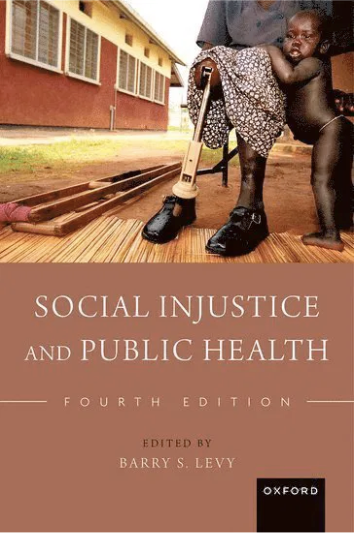
Social Injustice and Public Health, 4th Edition, edited by Barry Levy |
|
|
The fourth edition of Social Injustice and Public Health, edited by long-time Peace Caucus member Barry Levy, will be published in early 2026 by Oxford University Press in both print and electronic format. The new 600-page edition includes 31 chapters on populations affected by social injustice, aspects of public health affected by social injustice, and a detailed agenda for action. Peace Caucus chair Bob Gould and co-program chair Patrice Sutton have written a section on nuclear weapons. Chapters from previous editions have been updated and there are new chapters on children, incarcerated people, noncommunicable diseases, war, public health policy, and public health practice. More information is available at www.oup.com or by contacting Barry at blevy@igc.org. |
|
|
|
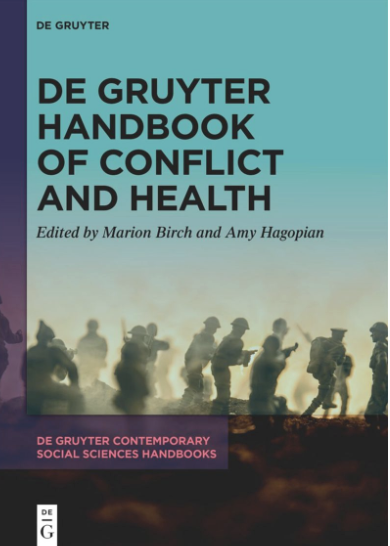
De Gruyter Handbook of Conflict and Health, edited by Marion Birch and Amy Hagopian |
|
Understanding the field of conflict and health continues to be crucial in today’s geopolitical context – and now more than ever, one might say. The field has many stellar contributors, and a few centers of academic excellence, but it has not yet been recognized broadly as a key component of public health by donors, national health research agencies, university accreditors or publishers. This handbook is a decisive and timely contribution to the advancement of the field. Topics cover the types, causes and means of conflict, the actors who try to respond to the physical and mental needs created, and the systems and power dynamics within which they have to operate. Authors shed light on the traditional areas of infectious and non-communicable diseases, water and sanitation, reproductive health, nutrition, food security and psychosocial care, while others expand on less covered subjects such as bereavement, siege, military noise and street medics.
The book will be published on April 15, 2026, where it will be available for purchase here. |
|
|
|
|
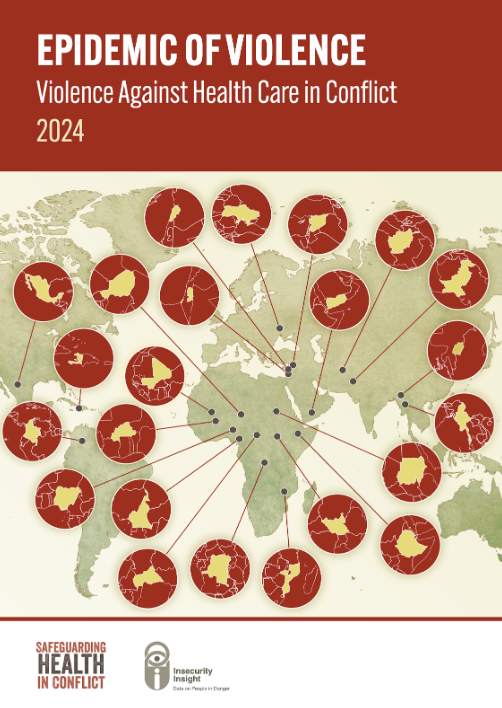
Report on Safeguarding Healthcare Workers in War Executive Editor Len Rubenstein (Chair, Safeguarding Health in Conflict Coalition) |
|
|
|
|
Viewpoint: Peace Through Diplomacy Desperately Needed in the Horn Written by Mulugeta Gebregziabher for Ethiopia Insight March 12, 2025 |
|
|
|
Review: The impacts of war on health, human rights, and the environment - an overview Written by Barry Levy for Frontiers in Public Health September 16, 2025 |
|
|
|
Attention World Leaders: Prevent Nuclear War, End Arms Race & Abolish Nuclear Weapons Written by Jackie Cabasso for Global Issues September 26, 2025 |
|
|
|
BMJ Series: Arms Industry as a Commercial Determinant of Health
The BMJ Series on the arms industry as a commercial determinant of health uncovers the role of the arms trade in health and calls for more scrutiny of its health-harming activities and its unhealthy relationship with governments.
An international group of experts lay out the direct and wider harms of arms and show how weapons manufacturers use commercial strategies to subvert public health agenda and shape discourse around security and violence.
The Series argues that, like the tobacco, alcohol, and fossil fuel industries, the arms industry should be seen as a commercial determinant of health, where corporate practices matter as much as products when considering how industries can harm health. |
|
|
|
The Costs of War project publishes public-facing research about the broad consequences of U.S. military operations and spending, including the costs for human life and well-being. |
|
|
|
|
Additional Sessions endorsed by the Peace Caucus |
|
Sunday, November 2, 2025 2:30 PM - 4:00 PM, Washington Convention Center - 152A
4:30 PM - 6:00 PM, Marriott Marquis - Monument 2177.0 Community-based Primary Health Care (CBPHC) in Times of Volatility and Change
Monday, November 3, 2025 8:30 AM - 10:00 AM, Washington Convention Center - 155
8:30 AM - 10:00 AM, Marriott Marquis - Marquis Salon 3 3143.0 Making Health Justice an International Priority: Challenges and Paths Ahead in Palestine
8:30 AM - 10:00 AM, Marriott Marquis - Liberty Ballroom K 3063.0 Influence and Transparency: How Commercial Determinants Affect the Public's Health
10:30 AM - 12:00 PM, Marriott Marquis - Marquis Salon 15
10:30 AM - 12:00 PM, Marriott Marquis - Silver Linden 3166.0 Advancing equity and trauma-informed responses to gender-based violence
2:30 PM - 4:00 PM, Washington Convention Center - 206 3242.0 Veterans Health: Exposed-informed Care, Military Occupational & Environmental Exposures
6:30 PM – 8:00 PM, Washington Convention Center - 147B
Tuesday, November 4, 2025 8:30 AM – 10:00 AM, Marriott Marquis - Liberty Ballroom K
10:30 AM - 12:00 PM, Marriott Marquis - Le Droit Park 4132.0 Human Rights & Innovations and Solutions in Global and International Health
2:30 PM – 4:00 PM, Marriott Marquis - Liberty Ballroom K
2:30 PM – 4:00 PM, Washington Convention Center - 150B 4283.0 Horrific Attacks on Immigrants and Refugees: Protecting our communities and Fighting Back
4:30 PM - 6:00 PM, Marriott Marquis - Monument 4325.0 The Forgotten Deadly Wars of Africa- Humanitarian and Health Impact
4:30 PM - 6:00 PM, Washington Convention Center - 150B 4346.0 Fighting Fascism on Multiple Fronts in Palestine, El Salvador and the United States
Wednesday, November 5, 2025 10:30 AM - 12:00 PM, Marriott Marquis - Monument
10:30 AM - 12:00 PM, Marriott Marquis - Le Droit Park 5094.0 Health in Conflict and Displacement
10:30 AM - 12:00 PM, Marriott Marquis - Independence Ballroom C |
Peace Caucus Officers |
|
Robert Gould and Townson Cooke Co-Chairs Naseem Parsa, Elise Pohl, and Patrice Sutton Co-Program Chairs Kathryn McDonald Communications Director |
Newsletter |
|
Content compiled by Kathryn McDonald, MPH |
|

|
Newsletter layout and website posting by Giselle Bergmeier, MPA of San Francisco Bay Physicians for Social Responsibility. |
Join the Peace Caucus and Make a Tax-Deductible Donation here. San Francisco Bay Physicians for Social Responsibility is the fiscal sponsor of the Peace Caucus. www.aphapeacecaucus.org |
|

