|
CPA Newsletter |
September 2025 |
|
Included in this edition:
|
|
|
|
CPA has a very lean budget. We heavily rely on member contributions for our continued work. Your financial support is essential for the ongoing work of the CPA! Please make a generous tax-deductible end of year contribution. Every bit helps. |
|
|
|
With Sadness, We Announce the Death of Robert Jay Lifton, MD, Psychiatrist & Psycho-Historian |
|
Just as we prepared to send out this Newsletter, we saw the sad news of the death of Robert Jay Lifton, MD who died on September 4 at the age of 99 years old. Dr. Lifton was an outspoken leader and prolific writer who addressed the intersection of psychology and the socio-political influences of the most profound historical events of the 20th/21st centuries. He brought attention to the understanding of collective violence, the reaction of humans to extreme situations, the human capacity for evil, as well as the potential for resilience in the face of immense trauma.
We will look at his life and contribution more deeply next month; for now we mourn his death and wonder who will be that guiding voice in shaping our understanding of the psycho-socio-political challenges of our world going forward. His courageous voice will be missed. See Dr. Steve Moffic’s brief personal and touching tribute. |
To My Climate-Concerned Health Colleagues, |
|
Jane,
September is Suicide Prevention Awareness Month. This month’s column is written by our colleague Caroline Dumont, MD, an expert on suicide and climate change.
Globally, over 720,000 people die by suicide each year, and suicide is the third leading cause of death in young people. The Commonwealth Fund 2023 International Health Policy Survey found the U.S. has the highest suicide rate compared to nine other high-income countries, and has been trending up. There is increasing evidence of relationships between suicidality and climate change. Climate-driven suicides must not be ignored if we are to protect those most at risk in our communities.
The climate crisis can be linked to suicide through direct and indirect impacts on health and well-being. Direct effects of burning fossil fuels such as air pollution and higher temperatures are linked to increasing suicide rates. Indirectly, climate-related suicides may increase when people experience extreme weather such as drought or crop-damaging heat. In its extreme, climate change permanently displaces people, and research has shown that refugees have higher rates of suicidality.
Beyond these impacts, climate change-suicide relationships are complex, interrelated and exacerbated by our public policies. We may see unintentional consequences of the Trump administration’s policies on socioeconomic and environmental stress within communities facing high rates of suicide. Consider farmers who, as U.S Senator (R) Tommy Tuberville recently highlighted, are three and a half times more likely to commit suicide than the general population. The short- and longer-term impacts of policies including agricultural tariffs on costs, the deportation of undocumented farmworkers causing crops to go unharvested, while backtracking on climate policies, may strain U.S. farmers even more. This stress will be layered on top of what a recent study estimates will be significant declines in agriculture yields by 2050. As the planet warms, there will likely be more climate-driven suicides.
We must simultaneously support all efforts to move away from our dependence on fossil fuel use, the driver of climate change, and support the transformative shift to clean energy. Together at CPA–and many other climate-concerned groups–we can find hope in action and advocate for sound mental health policies that protect people in our communities and beyond. |
20th Anniversary of Hurricane Katrina: August 29 |
|
On the 20th anniversary of Hurricane Katrina, Climate Psychiatry Alliance solemnly remembers the many lives disrupted, lost, and forever changed by that devastating storm. Katrina was a wake-up moment for many of us; a stark early warning of the deep interconnections between extreme weather, climate change, and mental health. Katrina highlighted how climate-driven disasters amplify social vulnerabilities, strain mental health systems, and disproportionately affect marginalized communities. Just when we need more resources for responding to disasters, the current administration is unraveling the essential supports we need.
See Dr. Steve Moffic’s reflections on Katrina here.
|
The Fight to Retain the Endangerment Finding: Update |
|
If you have been following our actions, you will know that the proposed repeal of the Endangerment Finding threatens to dismantle EPA’s ability to address climate pollution and to accelerate harmful emissions. The Endangerment Finding, issued by the Environmental Protection Agency in 2009, is the scientific and legal foundation for regulation greenhouse gas emissions. EPA Director Lee Zeldin is proposing to repeal it. It’s not too late for us to protect it.
We at CPA have been pouring our energy and time into advocating to oppose these actions.
|
|
Call to Action: Submit a Written Comment |
|
Here’s how you can help: you can submit a written public comment. Written comments are now due by September 22. These comments are important since they become part of the record and can be used to support potential future litigation–it is expected that this will go to the courts.
As trusted messengers, health professionals have an essential role to play in advocating for protecting the health of our patients and communities from harmful emissions, air pollution, and mental health. As psychiatrists, we have a unique expertise to speak to the harms on brain health and mental health.
You can submit your comment here. Click here and here for a few tips. |
|
Introducing Climate Junction |
|
Climate Junction is a unique collection of information and thinking about climate and mental health. It will be the new “home” for Ecopsychepedia, along with Climate and Your Mind, an open-access e-book with personal narratives from respected authors, and Gen Climate Speaks, a new youth-led podcast series. |
|
|
|
Climate Champion of the Month |
|
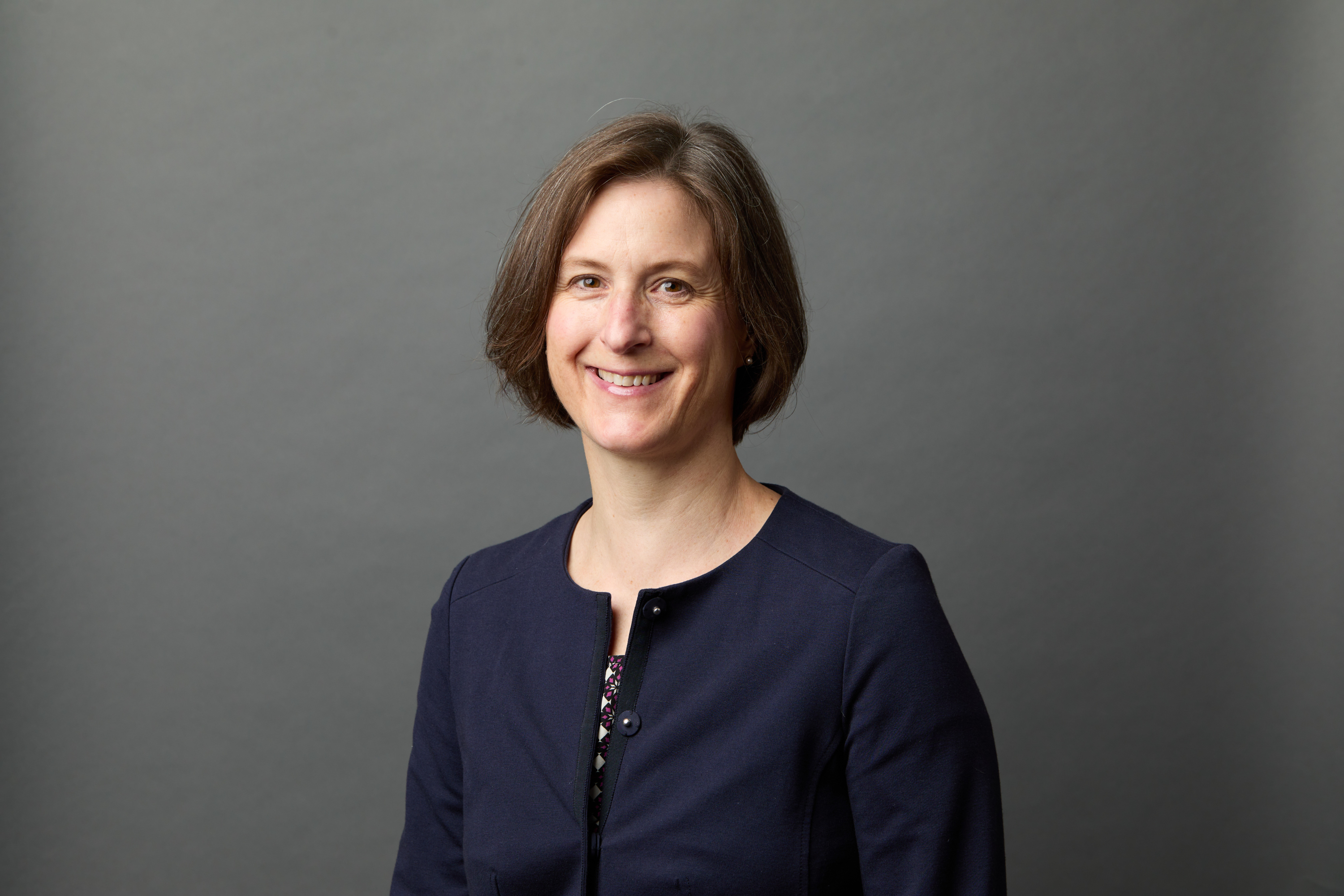
This month, we are delighted to spotlight the work of our colleague Caroline Dumont MD, MPH Assistant Professor of Psychiatry at Yale’s Department of Psychiatry. Among many projects, her current work focuses on developing interventions to address health disparities related to climate change and mental health. Working on the Community Support Program and Assertive Community Treatment teams at the Connecticut the Mental Health Center, where she often sees people in their homes and communities, inspires her research to support people with serious mental illness during extreme heat events. |
|
|
Her work on the relationships between suicide and climate change has been published in the Journal of Nervous and Mental Disease and in a highly-accessible and concise article for Ecopsychepedia. She is a reviewer for the Journal of Climate Change and Health, a global scientific medical journal. We are so appreciative that she has shared her expertise in providing our column on suicide, which will soon be published on CPA’s website, and for her many other important contributions. |
|
Events, Talks, Conferences, and Courses |
|
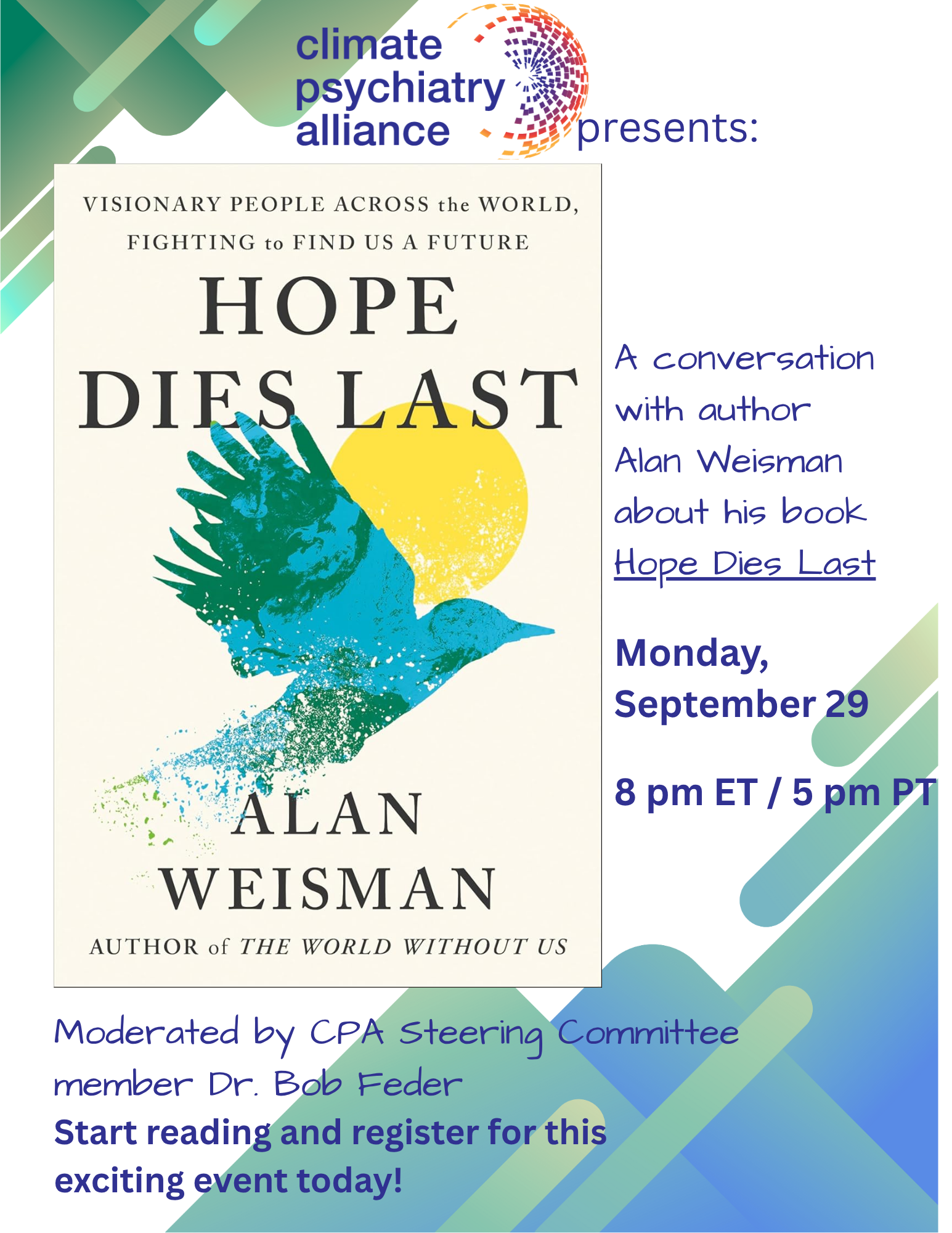
CPA AUTHOR EVENT: Robert Feder, MD, Steering Committee Member in Conversation with acclaimed author, Alan Weisman, on his latest book “Hope Dies Last”.
DATE: September 29, 2025, 8pm ET / 5pm PT LOCATION: Online Purchase the book HERE
|
|
|
|
|
|
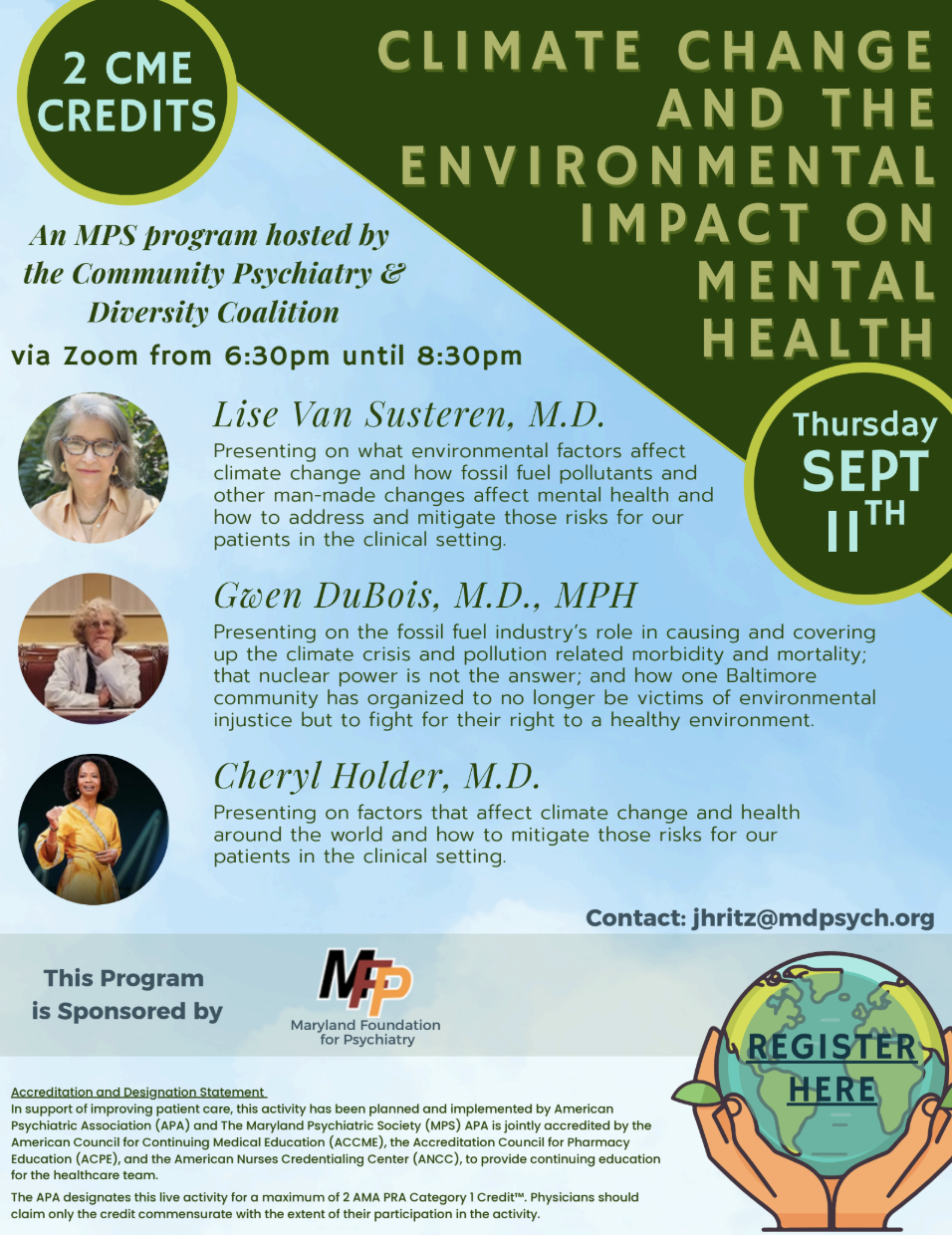
Climate Change and the Environmental Impact of Mental Health DATE: September 11, 2025 at 6:30 PM ET / 3:30 PM PT LOCATION: Virtual Presented by the Maryland Psychiatric Society with an incredible line up of speakers: Lise Van Susteren, MD, Gwen DuBois, MD, MPH, Cheryl Holder, MD. CME and CE credits available. Learn more here. |
|
|
|

|
Back to School Night: Raising Resilient Kids In An Age of Disasters DATE: September 11, 2025 at 7 PM EDT / 4 PM PDT LOCATION: Virtual (Zoom) How do we raise kids with a sense of safety, calm, joy, and purpose when our lives are full of extreme weather and other disruptions? Join the Climate Mental Health Network and partners for an interactive webinar about why and how to address the emotional impacts of collective challenges like climate change, and how to heal through collective action. |
|
|
|
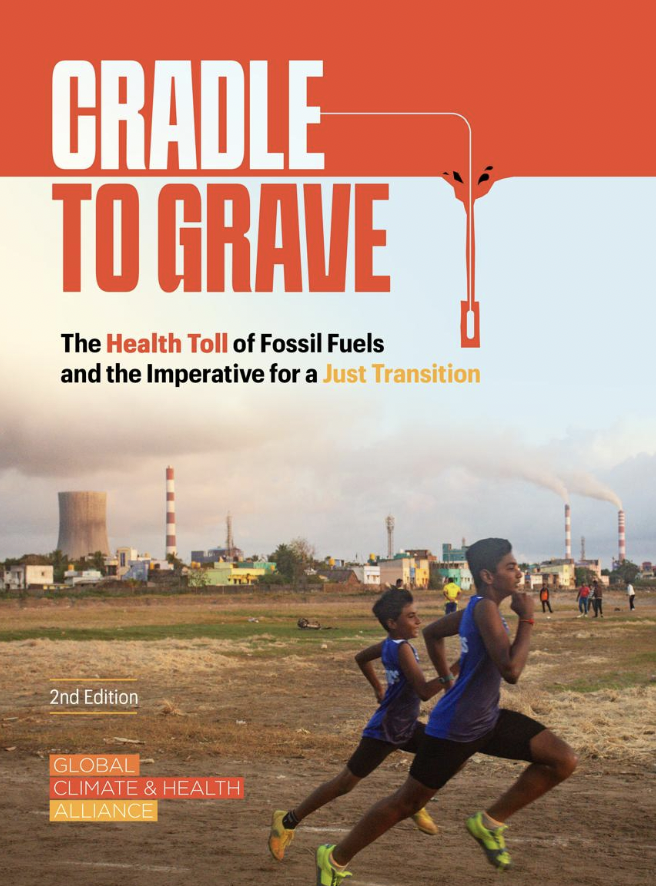
Global Launch: "Cradle to Grave: The Health Toll of Fossil Fuels and the Imperative for a Just Transition” DATE: September 16, 2025 at 6 AM PT / 9 AM ET LOCATION: Virtual (Zoom) This groundbreaking report from the Global Climate and Health Alliance offers the first comprehensive global overview of the health consequences of fossil fuel use. A live global webinar, present report’s findings and outline the urgent steps needed to end fossil fuel harm. |
|
|
|
|
Course: First Responder Operations DATE: September 11 – December 11, every Thursday from 5–8 PM PT LOCATION: Virtual REGISTER: Email Cassandra Dilosa, cdilosa@wi.edu Whether a first responder, a mental health practitioner, or a student, join The Wright Institute to learn about individual and organizational factors in first responder health & mental health. This unique multi-session course focuses on lives and careers of first responders and their families. Course director: Dr. Emily Diamond, Psy.D, Fellow of the Royal Society for Public Health. |
|
|
|
Day of Action: SUN DAY DATE: September 21 LOCATION: Nationwide. Find an event near you here. Bring the health voice to climate, health & democracy events! SUN DAY is a national day of action that will celebrate wind and solar power and stand up to the wealthy and well-connected who are doing everything they can to stop the clean energy transition.
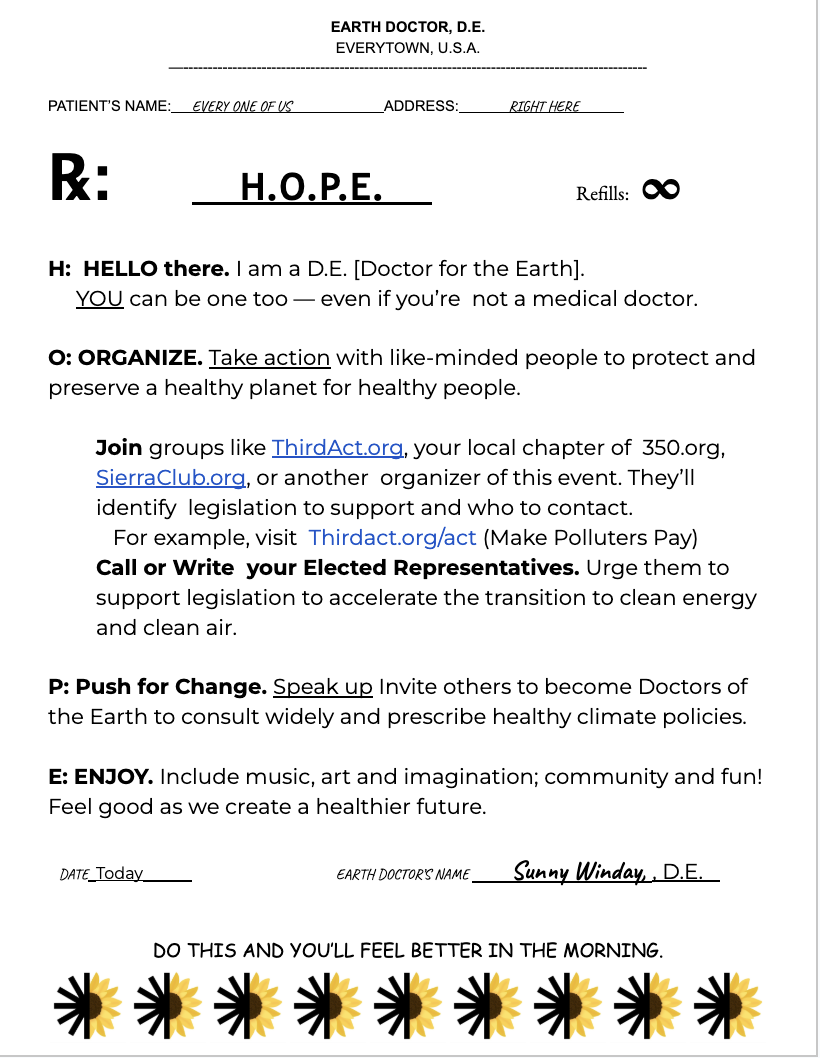
Sun Day is an opportunity to spread the message that health professionals want Clean Energy for Healthy People. Use the Prescription for H.O.P.E. and action-prescribe at Sun Day events: |
|
|
|
|
|
Micro-Credential in Climate Change and Youth Mental Health COURSE START DATE: The first cohort started September 2. Discover the course here. Sign up here to receive information about future dates for the Winter cohort.
This fully online and self-paced course is designed to equip frontline professionals with the knowledge and skills, to support youth in our changing climate. Presented by The Luna Moth Circle, with partnership from CPA and Ecopsychepedia. Certified through Carleton University in Canada, learners from any country can participate and earn a certificate. |
|
Good Reads |
|
DOE ignores decades of climate science and contributes to disinformation and public confusion. |
|
|
|
Climate Experts’ Review of the DOE: Climate Working Group Report For a very deep read, this an extensive report from climate scientists. |
|
|
|
Don’t let Donald Trump undermine your faith in the climate fight, published by Gina McCarthy in The Guardian on August 24, 2025. |
|
Good Listening and Watching |
|
How Students and Teachers Are Talking About Climate, NEW podcast episode by Climate One: “Their feelings are across a whole variety of spectrums. They're feeling a lot of anxiety. They're feeling dread, they're feeling fear,” says Robin Cooper, co-founder and president of the Climate Psychiatry Alliance. So what can the adults in young people’s lives do to help handle these strong emotions? Tune in to this stellar panel of guests interviewed by Climate One hosts. |
|
|
|
Where Climate Change Meets Mental Health, The GoodBeing Podcast, by Bo Aganaba. Follow this six part series on the intersection between Climate Change and Mental Health to hear from experts working at this intersection, as well as from young people directly sharing from their own lived experience. This series is part of a project in partnership with Carleton University, Break the Divide, Climate Psychiatry Alliance, and Families Canada, collectively known as Luna Moth Circle. |
|
Our Partners |
|
American Lung Association Chesapeake Climate Action Network Children's Environmental Health Network Climate 911: Health People Healthy Planet Climate Action Campaign Climate Health Now Climate Mama Climate Mental Health Network Climate Psychology Alliance North America Climate Psychology Alliance - UK Eco-America Evangelic Environmental Health Families for a Livable Climate Gen Dread Georgia Clinicians for Climate Action |
|
Michigan Clinicians for Climate Action Moms Clean Air Force Montana Health Professionals for a Healthy Climate My Geen Doctor National Academy of Medicine Action Collaborative on Decarbonizing the US Health Sector Physicians for Social Responsibility Physicians for Social Responsibility San Francisco Bay Chapter Restore Our Earth Subject to Climate The Medical Society Consortium on Climate & Health The Resilient Activist Virginia Clinicians for Climate Action |
|
|
|
|
|


