|
|
|
Commissioner Upthegrove - announces executive order to conserve 77,000 acres of legacy forest. |
Big News!
Last Tuesday, August 26th, at a press event at Tiger Mountain, Commissioner of Public Lands Dave Upthegrove signed a Commissioner’s Order directing the Department of Natural Resources (DNR) to conserve 77,000 acres of mature, structurally complex forests across Western Washington for their multiple ecosystem services benefits.
For five years, the legacy forest movement has been advocating for the irreplaceable ecological and watershed importance of these rare forests. If implemented well, Commissioner Upthegrove’s conservation mandate has the potential to be a landmark victory for the environmental community! |
|
|
Cause for celebration? Or cause for concern…?
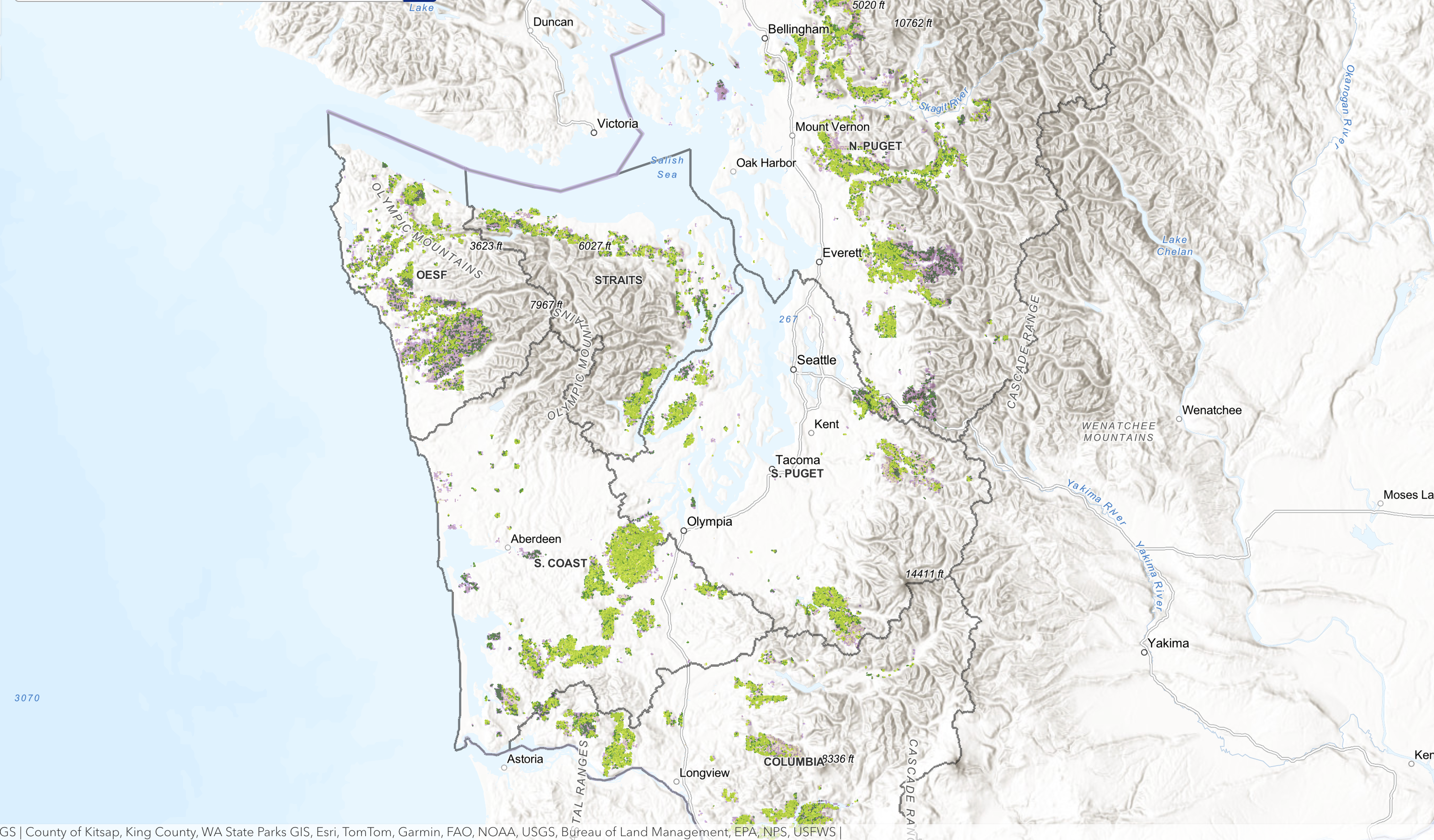
On the same day the Order was announced, DNR also released preliminary maps of the 77,000 acres through their newly launched “structurally complex forest finder.” This model identifies more than 77,000 acres, which means that some of these structurally complex forests would be available for logging, including some of the sales that had been previously paused for fiscal year 2026 and beyond (more on this soon…).
The preliminary selection was far from ideal, and contained major errors, many of which were identified by the Legacy Forest Defense Coalition (LFDC), who did a thorough review of the mapping issues and implications - all of which alarmed the conservation community. The selection of acreage in the preliminary DNR maps seemed to contradict the supposed intent of the executive order: to conserve 77,000 acres of mature, structurally complex forests. In addition to multiple mapping errors, a significant amount of acreage consisted of slivers of land less than 5 acres that will not serve as meaningful older forest habitat. Many conservation community members felt very concerned about these maps not reflecting the spirit of the executive order.
Through several intense meetings between members of the larger legacy forest movement and Commissioner Upthegrove and DNR staff, Upthegrove pledged to work collaboratively to correct the mapping problems and errors. Commissioner Upthegrove made it very clear that the maps are preliminary.
CRF would also like to note that having these maps available to the public for feedback is a positive step toward better data transparency.
Commissioner Upthegrove also addressed a major concern about the DNR’s five year timber sale plan. Previously put on hold during DNR’s “Time out for Trees,” the timber sales containing structurally complex forests scheduled for the next five years were not included in the 77,000 acres, which made it seem that DNR was proceeding with all of these sales. Commissioner Upthegrove made it clear that this will likely not be the case once the maps are redrawn, but that acres in excess of 77,000 still may be logged. We anticipate seeing some of the sales containing legacy forests scheduled for Fiscal Year 2026 to move forward due to the significant costs already invested in the planning process. However, we are optimistic that the final map will correct this significant error of including all legacy forest sales scheduled for the next five years.
CRF is now laser focused on advocating for the DNR to adopt the best possible criteria for making the ultimate selection of the 77,000 acres as strong as possible. We are rolling up our sleeves and working on influencing the next iteration of the map of conservation acres, working towards a map that we can support as an organization dedicated to the permanent conservation of legacy forest on our state public lands.
Legislative action will be needed…
Another significant part of the Order will involve requesting legislative authority and support to generate alternative revenue other than from logging. As quoted from the DNR’s “Forest Forward” flyer passed out at the press conference,
“Leveraging DNR’s globally recognized leadership in sustainable land management, we will pursue strategies other than traditional industrial harvests to ensure these carbon-dense, habitat-rich forests are available for future generations.”
Proposed Forest-Forward Strategies:
The Commissioner said he will be asking the legislature to pass a bill giving DNR clear authority to directly enter the ecosystem service markets.
We are expecting timber industry opposition, and we will need your help in the next Legislative Session to make progress! When Big Timber interests begin their attack, we will also need your help to show widespread public support for conserving legacy forests. We expect this to heat up in the following months, so please keep your eye out for future action alerts from us!
Moving Forward:
Assuming the Commissioner approves a significantly better selection of 77,000 acres, we see Commissioner Upthegrove’s Order as a major first step in shifting how we steward our state forests—moving toward an approach that prioritizes long-term ecological health. If well-designed, it can also help DNR meet its Habitat Conservation Plan (HCP) goals for older forests far more quickly than under previous strategies.
From its inception, CRF’s mission has been to achieve the permanent protection of the last remaining legacy forests in Western Washington. These irreplaceable forests aren’t just dollar signs to be harvested for profit — they’re critical for:
These mature, structurally complex forests are our best natural climate solution - the old growth of the future!!
The repetitive disinformation dolled out by Big Timber marketing and industry-funded ”research” cannot undermine the ecological reality of our forested ecosystem. We do not have to abide by the false choice of clearcut logging versus ecological forestry. We do not have to perpetuate the false choice of aggressive industrial logging versus funding schools and important county services. The scientific community has shown that there are ways to manage forests ecologically BOTH for timber harvest AND for ecological integrity.
Commissioner Upthegrove’s order to protect 77,000 acres of legacy forests helps take us one step closer to breaking free from the prison of false choices, and aligns with:
This is a shift toward a bigger vision—one where we rethink forestry and create new ways for rural communities to thrive. There is room to find win-win solutions. The pushback from the timber industry has already begun. The American Forest Resource Council issued a press release on the day of the announcement roundly criticizing any move to conserve older forests. They also are threatening a legal challenge.
We need to consistently reinforce the new legal precedent: under the CNW vs. Franz ruling, DNR has broad discretion to manage public lands for myriad benefits—not just maximum timber revenue.
And let’s face reality: the current funding system is outdated. Some rural communities and DNR itself still depend heavily on timber revenue generated through industrial clear-cut practices. This needs to change. CRF will be working closely with the DNR and state lawmakers to develop alternative funding sources for rural communities and to expand ecological forest management across the state.
Support the Movement:
Please support CRF’s mission by donating today. Your generosity powers everything we do. Right now is a critical moment for CRF to continue our work.
As we work with DNR to refine the preliminary maps and outline the best possible criteria, CRF will be in these forests ground-truthing these areas to verify the next iteration of maps. For example, we need to raise $500 for a new camera and for gas money to send our experienced team of surveyors out in the woods this week!
We need your support to continue our on-the-ground survey work. We also need your support to continue our legislative and policy work to develop alternative funding sources for rural communities and to expand ecological forest management.
With your help, together we can shape a forest future rooted in science, justice, and care for generations to come. |
|
|
|
|
State Lands September is here! - celebrate with events & in-person action! |
|
State Lands September is a collaborative effort between environmental and conservation-focused nonprofits to help honor the heritage of our treasured Pacific Northwest forests and advocate for the type of resilient, sustainable, and ecological forest management practices we know help communities thrive.
Join us as we celebrate the great outdoors all September! From rallies to book discussions to forest walks, we’re hosting a range of events to showcase the innovative solutions being pioneered across the state.
Find an event near you and RSVP!
How we take care of our lands is how we take care of our communities, and there’s no “one-size-fits-all” solution. Fortunately, we have the tools, the expertise, and the people power to protect the forests in our backyards to ensure they remain our best tool in the fight against climate change, support working families and local economies through sustainable timber practices, and provide cultural and recreational access to our rich natural environment.
The forests belong to all of us!
State Lands September 2025 is brought to you by Sierra Club Washington State, Center For Responsible Forestry, Legacy Forest Defense Coalition, RE Sources, Washington Conservation Action, and Earth Law Center. |
|
|
|

|
Action Alert! Kick Off State Lands September - Rally to Support Public Lands and Indigenous Lifeways. Featuring: xaalh The Way of the Masks Totem Pole Journey. |
|
Bellingham, WA --Indigenous leaders from Se’Si’Le and the Lummi Nation’s House of Tears Carvers will launch a two-week campaign on Saturday, September 6 called “ xaalh and the Way of the Masks Totem Pole Journey,” in response to the Trump administration’s plan to repeal the Roadless Rule and end protections for nearly 60 million acres of National Forests.
As part of the campaign, Se’Si’Le and its partners will take part in the Rally to Support Public Lands and Indigenous Lifeways in Bellingham, Washington, on September 6 from 12:00-3:00 at Maritime Heritage Park. This is one of nine events to be held at Tribal Nations, public venues, places of worship, and institutions of higher learning throughout a 1,700-mile totem pole journey across the Pacific Northwest.
Elected officials, speakers from the Lummi Nation, communities of faith, and environmental organizations will address the importance of the Roadless Rule and other safeguards for public lands, and how they have protected ancient forests from logging, mining, and drilling for decades. The campaign event will also feature a twelve-foot totem pole, and cedar masks carved by the Lummi Nation’s House of Tears Carvers. The “Bear-Becomes-Person” transformation totem pole and the masks honor the Indigenous knowledge of the sacred balance of life known as xaalh.
“The ancient forests provide our People with sәla-exʷ: (the strength that comes from the old ones),” said Jewell James, Master Carver from the House of Tears Carvers. “They are integral to our ancestral cultural ways of knowing nature and our spiritual beliefs and practices.”
This event, like the others along the journey across Washington, Oregon, and California will bring people together in defense of forests, rivers, landscapes, and Indigenous lifeways. For decades, safeguards like the Roadless Rule have helped protect nearly two million acres of wild forests in both Oregon and Washington State, drinking water for over 60 million Americans, and habitat for more than 1,600 threatened plants and animals.
|
|
|
|
|
Additional Tour Dates - xaalh and the Way of the Masks. |
|
In addition to the Bellingham rally, we encourage you to attend the other Way of the Mask tour dates, especially the rally in Olympia on September 8th!
Honoring the Spirit of the Lands, Waters, and Forests - an Indigenous-led event series and journey of ceremony, resistance, and restoration to protect forests, salmon habitat, and tribal sovereignty.
This campaign makes the case for a narrative that accentuates the interrelatedness of Treaty rights and inherent rights, Indigenous ways of knowing nature and environmental justice, healthy rivers and salmon habitat, spiritual and ecological balance, and ancient forests and climate resilience. Below are the links to find out more information and register for each event. Please make sure to RSVP! Click here for more information on tour dates and locations. |
|
|
|
|
Action Alert! Help include legacy forests within the Salt Creek Recreation Area. Take the Clallam County Parks Survey! |
|
We have a once in a decade opportunity to suggest expanding Salt Creek Recreation Area!
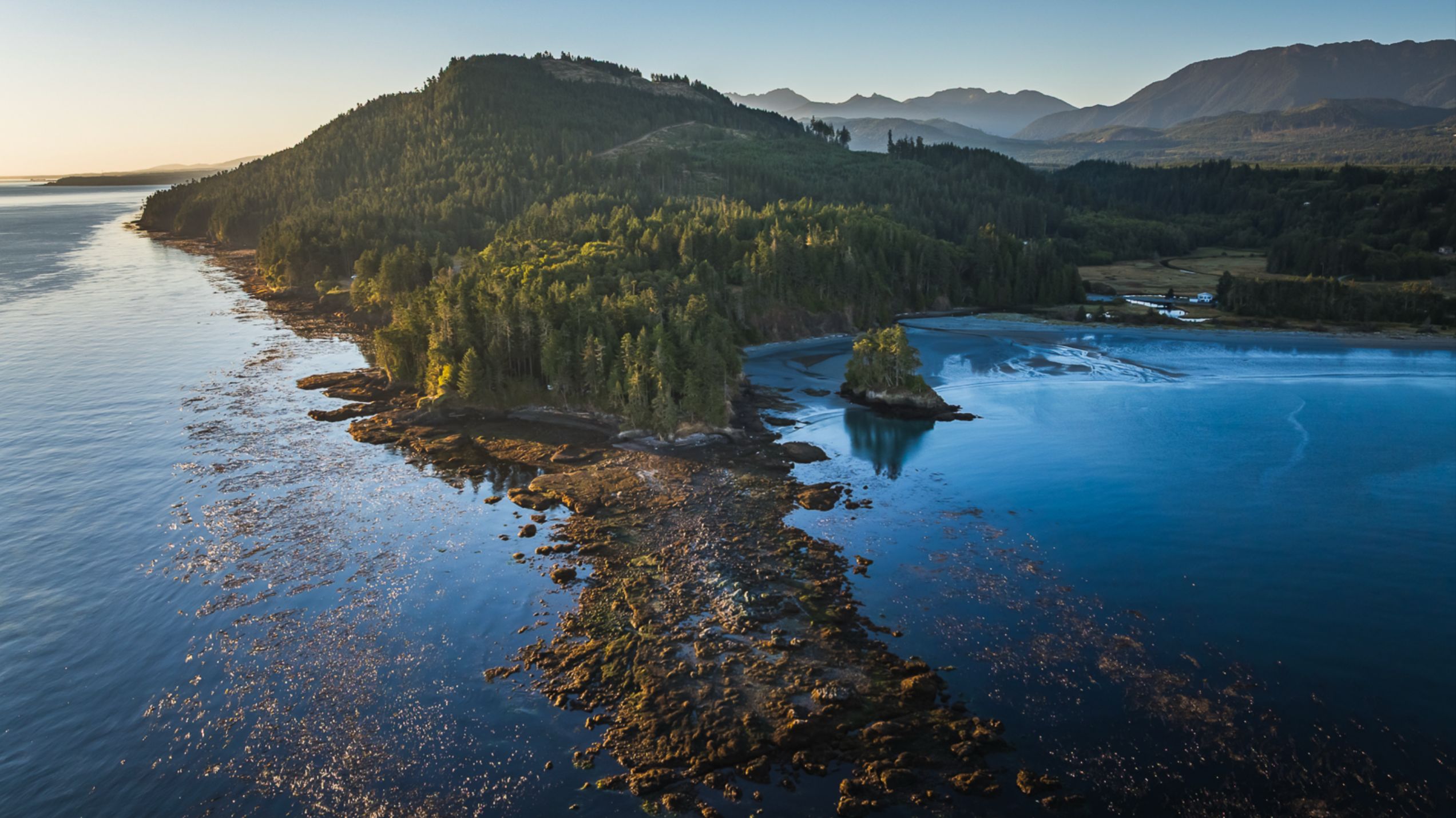
The Salt Creek Recreation Area is a Clallam County park on the Olympic Peninsula in Washington State, featuring campgrounds, trails, tide pools, and historical World War II bunkers. The park offers diverse activities, including hiking, beachcombing, kayaking, and shore diving in a protected Marine Sanctuary, and is known for its scenic views of the Strait of Juan de Fuca and beautiful sunsets.
There are large areas of legacy forest adjacent to the park, making a natural addition to this incredibly popular park loved by locals and visited by thousands every year! Let’s protect and restore this important coastal area!
Clallam County Parks & Recreation Advisory Board is conducting a Survey until Oct. 3 to update the Parks & Recreation Master Plan. Including a vision for an expanded Salt Creek park is a critical step toward long term protection. We need your help to get as many survey responses as possible, especially folks who live or like to recreate in Clallam County!
How to fill out the survey: While it’s essential for Clallam residents to fill out this survey, you can still fill it out even if you live outside of Clallam County, it's just important to say that you recreate in that area. When you come to the last question which says “Funding is currently very tight, but if that changes during the ten-year period of this plan, please select your top 3 most important changes you would like to see for Clallam County parks. Rank your top three choices.” You can select your top choice as “expand existing parks by acquiring adjacent land” and then select “Salt Creek Recreation Area” as the specific park. Add a comment why. Here are some ideas:
-- Salt Creek Recreation Area is one of the most popular parks in Clallam County and is often crowded. Expanding the park would allow for less crowding and more recreational opportunities for its many visitors.
-- Visitors to Salt Creek Recreation Area are often understandably shocked to see the clear cuts that mar Striped Peak and that are visible from many of the well-used trails. Converting these areas to park land would make the area even more beautiful and welcoming to visitors and provide important habitat for the herds of elk and other iconic animals that live in Clallam County.
– If you are a Clallam resident it’s helpful to share why this is a top priority for you. For everyone it’s helpful to share any personal anecdote for why expanding the park is important to you.
Join the Elwha Legacy Forest Coalition to learn more about this effort at a community gathering on Sept. 21st, 4:30 – 6:30 at the Salt Creek Recreation Area Group Picnic Shelter.
|
|
|
|
Please Support our Work - donate to CRF |
|
The Center for Responsible Forestry works on behalf of all people in WA to achieve the permanent protection of the last remaining legacy forests in Western Washington.
Please DONATE to support the continued efforts of our work! |
|
|
|
Contact Us |
|
|
|